The golden duck is a unique and important aspect of cricket that adds to the drama and excitement of the game. It represents the unpredictability and complexity of cricket and the many challenges that players face on the field.
The golden ducks in cricket are used to describe a dismissal where a batsman is out on the very first ball they face in their innings, without scoring any runs. It is considered a particularly ignominious way to get out, as the batsman has not had the opportunity to get settled at the crease or score any runs.
The term “golden ducks in cricket” is used to distinguish this type of dismissal from a regular “duck,” which is when a batsman is dismissed without scoring any runs but has faced more than one ball.
Getting out for a golden duck can be a big blow to a team’s morale, especially if it happens early in the innings. However, it is also a testament to the bowler’s skill and can be a great confidence booster for the bowling team.
The golden ducks in cricket are considered a very disappointing and embarrassing event for a batsman, as it implies that they were unable to score any runs and contributed nothing to the team’s total.
Why is it called golden ducks in cricket?
The term golden ducks in cricket is used to describe a dismissal where a batsman is out without scoring a run on the very first ball they face in their innings. The origin of the term is not entirely clear, but there are a few possible explanations:
Theory one
One theory suggests that the term “golden” is used because getting out on the very first ball is a rare and valuable event for the bowler’s team, much like winning a gold medal in a competition.
Theory two
Another theory suggests that the term “golden” is a reference to the idea of “golden opportunities” in life. By getting out for a golden duck, the batsman has missed a golden opportunity to score runs and help their team.
Theory Three
Yet another theory is that the term “golden” refers to the idea of a “golden egg”, which is a valuable and rare commodity. In this context, getting out for a golden duck is seen as a rare and valuable achievement for the bowler’s team.
KL RAHUL ON A GOLDEN DUCK DURING IND VS PAK
Whatever the origin of the term, it has become a widely recognized phrase in cricket, used to describe a particularly disappointing or embarrassing dismissal for a batsman.
How do Golden Ducks in Cricket Impact the Matches?
Golden ducks in cricket are significant for a few reasons.
Achievement for Bowlers
A golden duck means that a batsman has been dismissed on the very first ball that they face in their innings. This is a rare and difficult feat for bowlers to achieve and highlights their skill and effectiveness in the game.
Shifts the Flow of the Game
A golden duck can have a significant impact on the momentum of a match. It can be demoralizing for the batting team, as they lose a wicket without adding any runs to their total, and it can give the bowling team a boost of confidence and motivation. The dismissal of a key batsman for a golden duck can also change the course of a match and make it more challenging for the batting team to achieve a competitive total.
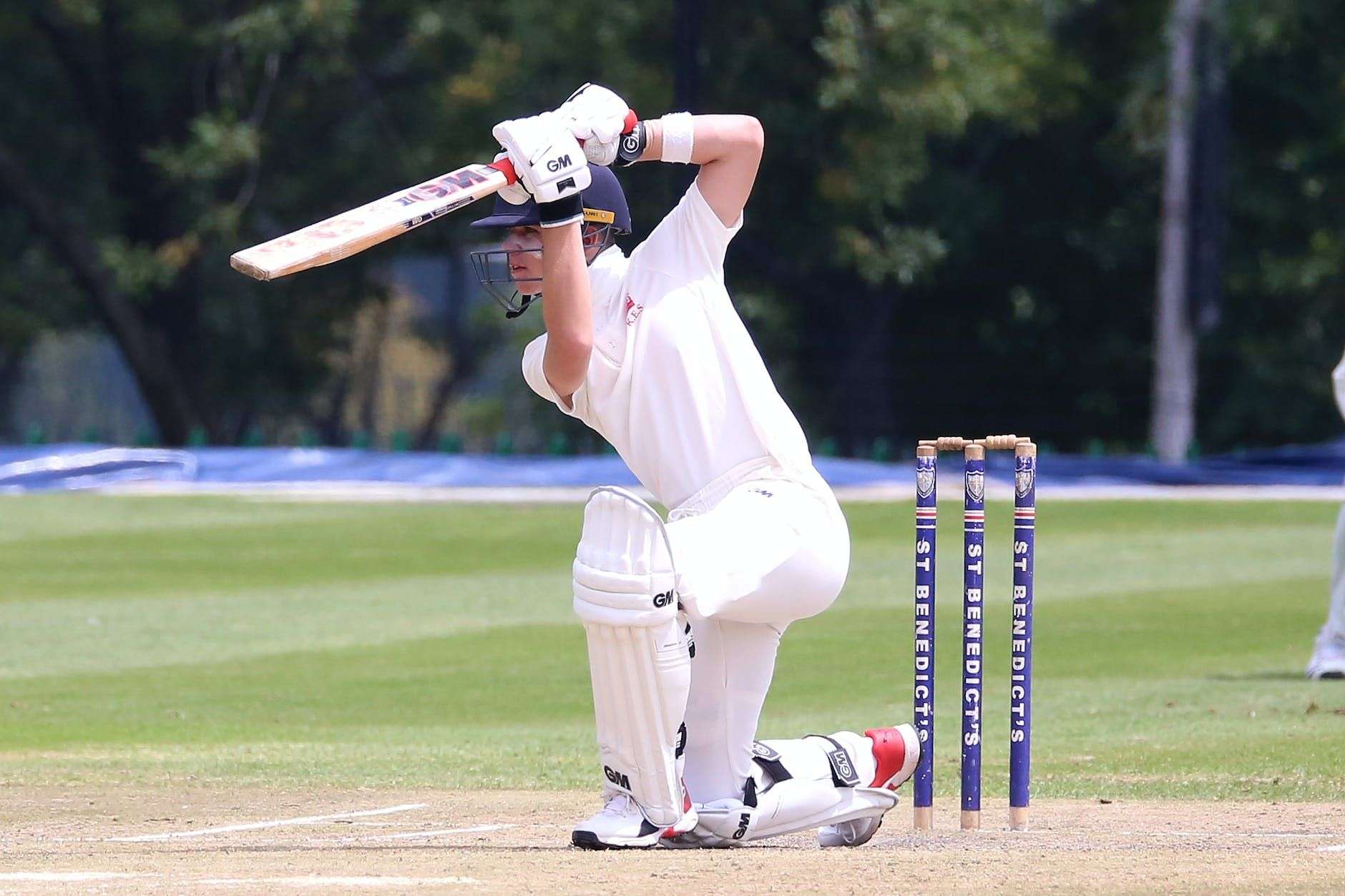
Stylish Drive
A Memorable Moment for a Batsman
Golden ducks in cricket can be a significant moment in a batsman’s career. It can be a reminder of the challenges and pressures of the sport and the need for focus, concentration, and skill to succeed.
A golden duck can also motivate a batsman to improve their technique and mental approach to the game, and to make a stronger contribution to their team’s success in future matches.
Players with Golden Ducks in Cricket
Many famous cricketers have been dismissed for golden ducks in cricket at some point in their careers. Here are a few notable examples:
Sachin Tendulkar
Widely regarded as one of the greatest batsmen of all time, Sachin Tendulkar was dismissed for a golden duck in a Test match against Australia in 2005.
Ricky Ponting
The former Australian captain was dismissed for a golden duck in a Test match against South Africa in 2006.
Brian Lara
The West Indian batting legend was dismissed for a golden duck in a Test match against Pakistan in 1997.
Jacques Kallis
The South African all-rounder was dismissed for a golden duck in a Test match against India in 2010.
Steve Waugh
The former Australian captain was dismissed for a golden duck in a Test match against England in 1995.
Virat Kohli
The Indian batting star was dismissed for a golden duck in a Test match against England in 2021.
Kumar Sangakkara
The Sri Lankan wicket-keeper batsman was dismissed for a golden duck in a Test match against South Africa in 2012.
Getting out for golden ducks in cricket is not uncommon, and many great players have experienced it at some point in their careers. It’s often seen as a test of a player’s resilience and mental strength to bounce back from such dismissal and perform well in their next innings.
Players with the Most Golden Ducks in Cricket
There have been many players in cricket who have been dismissed multiple times for golden ducks in cricket in their careers. Here are some notable players with the most golden ducks across all formats of cricket:
Sanath Jayasuriya (Sri Lanka) – 34 golden ducks
Wasim Akram (Pakistan) – 28 golden ducks
Courtney Walsh (West Indies) – 27 golden ducks
Chaminda Vaas (Sri Lanka) – 25 golden ducks
Glenn McGrath (Australia) – 24 golden ducks
Muttiah Muralitharan (Sri Lanka) – 23 golden ducks
Nathan Lyon (Australia) – 22 golden ducks
Anil Kumble (India) – 20 golden ducks
Shane Warne (Australia) – 20 golden ducks
Stuart Broad (England) – 19 golden ducks
It’s worth noting that these are all bowlers, and it’s not uncommon for bowlers to have a higher number of golden ducks in cricket than batsmen. This is because bowlers are often lower-order batsmen and may not have as much skill or experience with batting. Additionally, bowlers are more likely to face high-quality bowling and be dismissed early in their innings.
Other Types of Ducks in Cricket
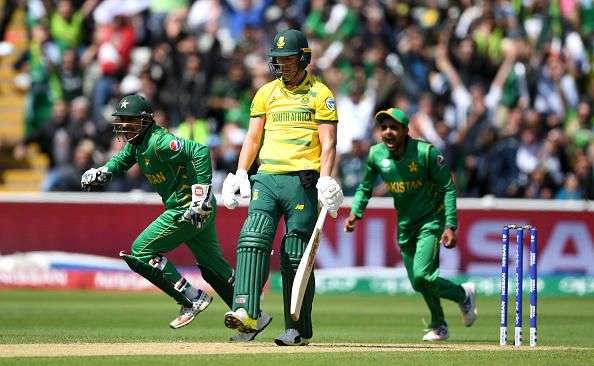
AB DE VILLER’S FIRST GOLDEN DUCK
Diamond Duck:
When a non-striker is run out without facing a ball, it’s called a diamond duck. The terms m often used humorously in cricket commentary, and it adds to the unique language and traditions of the sport.
While it is a rare occurrence, it can have a significant impact on the outcome of a match, especially in shorter formats of the game, such as Twenty20 or One-Day Internationals, where every run and wicket count.
Silver Duck:
When a batsman gets out on the second ball they face in their innings, it’s called a silver duck. A silver duck is a reminder of the challenges and pressures faced by batsmen in cricket, and it highlights the importance of focus and concentration from the very first ball they face in their innings.
Bronze Duck:
When a batsman gets out on the third ball they face in their innings, it’s called a bronze duck. A bronze duck is a reminder of the unpredictable nature of cricket and the importance of patience, focus, and skill for batsmen who want to succeed at the highest level of the sport.
Royal Duck:
This is when a batsman is dismissed without facing any deliveries in their innings. This can happen if a batsman is timed out, or if they are dismissed without facing a ball due ta retirement or injury.
Pair Duck:
When a batsman is dismissed for a duck in their first innings and then again in their second innings, it is referred to as a “pair duck”. A pair duck is a rare occurrence in cricket, and it highlights the difficulty and challenge of the sport.
It also provides opportunities for statistical analysis and comparison, as it is a notable achievement for bowlers who can dismiss a batsman for a pair duck.
Overall, The term “golden duck” has evolved to include other variations, such as “silver duck” and “diamond duck,” depending on the number of balls faced before getting out. These variations add to the richness and complexity of the game and provide more opportunities for statistical analysis and comparison.
Conclusion
The concept of golden ducks in cricket has become an integral part of the sport’s vocabulary and traditions. It represents a significant achievement for bowlers and a disappointing moment for batsmen. A batsman getting out on the first ball of their innings can be a big blow to their team’s chances of success, especially in high-pressure situations such as knockout games or important matches.
While getting out on golden ducks in cricket can be a frustrating experience for a batsman, it also provides an opportunity for growth and learning. It can motivate them to improve their skills and become more resilient in the face of adversity. In this sense, the golden ducks in cricket represent a valuable lesson for cricketers of all levels, reminding them of the importance of mental toughness and perseverance in the face of failure.
What is sledging in cricket? In the context of sports, sledging in cricket refers to the practice of verbally insulting, taunting, or intimidating an opponent to distract them from their performance or provoke a reaction. Sledging can involve a range of tactics, from making personal comments about an opponent’s appearance, family, or personal life, to using aggressive or abusive language to unsettle them.
Sledging in cricket is generally considered to be unsportsmanlike behavior and is often discouraged or penalized by sports authorities. However, it is still sometimes used as a tactic by players looking to gain an advantage over their opponents, particularly in high-pressure or competitive situations. It is a controversial tactic that has been used in cricket for many years.
Sledging can assume many forms, ranging from mild banter to personal attacks Some players use it to gain a psychological advantage over their opponents, while others see it as an integral part of the game. However, it is not universally accepted and has been criticized by many players, coaches, and fans who argue that sledging is disrespectful, unsportsmanlike, and can create a hostile and negative environment on the field.
Is Sledging in Cricket good or bad?
Before going to discuss whether it is good or bad:
Is sledging allowed in cricket?
Sledging itself isn’t explicitly banned in cricket. There are no set rules against it in the Laws of Cricket. However, there are limitations. Sledging shouldn’t cross the line into personal abuse or racist remarks. The concept of “Spirit of Cricket” emphasizes fair play and sportsmanship. Umpires can penalize bad behavior under this concept.
So, sledging within certain boundaries is generally tolerated. But if it gets aggressive or insulting, it can lead to warnings or penalties.
But having said this, there are both positive and negative sides of it.
From a positive perspective, aggression and sledging are an essential part of sports. Sledging in cricket can be seen as a legitimate tactic to gain an advantage over the opposition. It can be used to distract and disrupt the concentration of a batsman, which may cause them to make mistakes or play shots they otherwise wouldn’t have. Sledging can also help to build team camaraderie and boost morale, as players feel they are working together to put pressure on the opposition.
However, there are also many negative aspects to sledging. It can be seen as unsportsmanlike and disrespectful and may lead to arguments or even physical altercations on the field. Sledging in cricket can also harm the mental health of players, particularly if they are targeted with personal or abusive comments.
Controversial Sledgings in Cricket
“Get ready for a broken arm”
Australian fast bowler Glenn McGrath famously said this to Zimbabwean batsman Eddo Brandes during a match in 1996. Brandes, who was not known for his batting, replied, “If you get any wickets, I’ll give you a Ferrari.”
“I can see why you’re the captain now”
Australian wicket-keeper Adam Gilchrist reportedly said this to England captain Nasser Hussain during a match in 2002. Hussain had just played a poor shot and was caught out.
“You’re not good enough to play for England”
Australian opener David Warner allegedly said this to England batsman Jonathan Trott during the 2013-14 Ashes series. Trott subsequently left the tour due to a stress-related illness.
“I’ll cut your throat”
Indian fast bowler S. Sreesanth allegedly said this to Australian batsman Andrew Symonds during a match in 2008. Symonds, who is of West Indian descent, later accused Sreesanth of racial abuse.
“You’ve got more Indian in you than you think”
Australian batsman Matthew Hayden allegedly said this to Indian spinner Harbhajan Singh during a match in 2008. Hayden later denied commenting.
Classic funny moments of Sledging in Cricket
SOURCE: SCOOPWHOOP
Sledging in cricket has become a part of the game and has produced some classic funny moments over the years. Here are some examples:
Shane Warne vs Daryll Cullinan
During a match between Australia and South Africa, Warne famously asked Cullinan, “I’ve been waiting two years to bowl to you again. How does it feel?” Cullinan responded by hitting Warne for four, to which Warne said, “Well bowled, Daryl.”
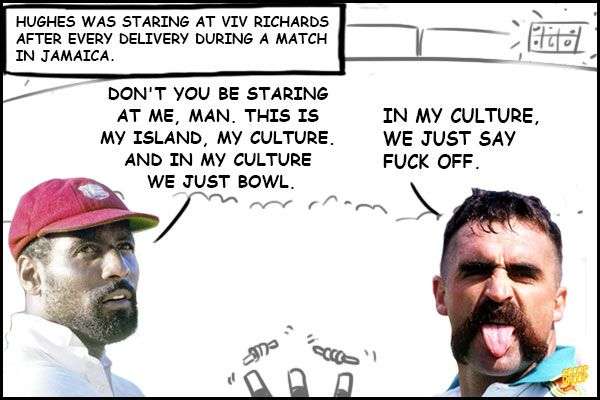
Merv Hughes vs Robin Smith
During an Ashes series in England, Hughes told Smith, “You can’t bat, you’re a bus driver.” Smith responded by hitting Hughes for four, to which Hughes replied, “Hey, Robin, we make a good pair. I’m the one who’s bowling, and you’re the one who’s getting hit.”
Mark Waugh vs James Ormond
During a match between Australia and England, Waugh famously asked Ormond, “Mate, what are you doing out here? There’s no way you’re good enough to play for England.” Ormond replied, “Maybe not, but at least I’m the best player in my family.”
Ravi Shastri vs Mike Whitney
During a match between India and Australia, Whitney said to Shastri, “If you leave your crease, I’ll break your effing head.” Shastri responded, “If you could bowl as well as you talk, you wouldn’t be a bad bowler.”
It’s important to remember that sledging in cricket should never cross the line into personal abuse or be used to incite violence, a bit of playful banter can add to the excitement of the game.
Some Classic Funny Sledges to Use in Cricket
CRICKET BALL AND STUMPS
Here are some classic examples of humorous sledging in cricket that have been used in the past:
To a batsman who had just survived a close call: “You’re living so dangerously, you should apply to be a stunt double for Sylvester Stallone.”
To a bowler who was having a difficult time with his line and length: “Mate, you’re bowling so wide, you could bowl a maiden over in an airport lounge.”
To a batsman who had been playing defensively for a while: “Why don’t you take your bat and go home? You’re blocking the run.”
To a batsman who was taking a long time to get ready to face a delivery: “Hey mate, if you’re going to take that long to get ready, I’ll go make a cup of tea while I wait for you.”
To a bowler who was struggling to get a wicket: “You’re bowling so badly, even the umpire wants to give you out.”
Remember, while sledging in cricket can be funny, it’s important to always be respectful and not cross the line with personal or offensive remarks.
Most Famous Sledges In Cricket
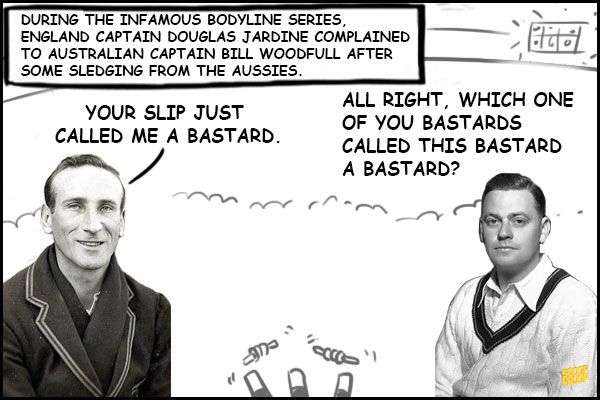
The “Bodyline” Series Sledge
The 1932-33 Ashes series between England and Australia is famous for the tactic of bowling short and fast deliveries aimed at the batsman’s body. Australian captain Bill Woodfull was famously quoted as saying “there are two teams out there, one playing cricket and the other playing ‘Bodyline'”, in response to the perceived unsporting behavior.
SOURCE: SCOOPWHOOP
Shane Warne vs. Daryll Cullinan
Shane Warne, one of the greatest spin bowlers in cricket history, famously taunted South African batsman Daryll Cullinan by saying “I’ve been waiting two years for another chance at you” when they met in a Test match in 1999. Cullinan had previously been dismissed by Warne several times, and the sledge seemed to rattle him as he went on to score just four runs.
Glenn McGrath vs. Eddo Brandes:
In a Test match between Australia and Zimbabwe in 1997, Australian fast bowler Glenn McGrath was frustrated by Zimbabwean tailender Eddo Brandes’ resistance. McGrath was heard asking Brandes “why are you so fat?” to which Brandes replied, “because every time I make love to your wife she gives me a biscuit”. The witty retort made headlines around the world.
Mark Waugh vs. Jimmy Ormond
Australian batsman Mark Waugh famously sledged English bowler Jimmy Ormond by saying “Mate, what are you doing out here? There’s no way you’re good enough to play for England.” Ormond responded by taking Waugh’s wicket in the very next over and quipping “Maybe not, but at least I’m the best player in my family.”
Viv Richards vs. Greg Thomas
In a county match between Glamorgan and Somerset in 1986, West Indian batsman Viv Richards was bowled by English bowler Greg Thomas. Thomas allegedly shouted “It’s red, it’s round, and it’s supposed to hit the stumps,” to which Richards replied, “You know what it looks like, now go find it.” Richards went on to score a century in the match.
These are just a few examples of sledging in cricket that have become famous for their wit or impact on the game.
Conclusion
Sledging in cricket, also known as verbal abuse or trash-talking has been a controversial aspect of cricket for many years. It involves players using insults, taunts, or provocative remarks to unsettle their opponents on the field.
While sledging in cricket was once seen as a part of the game, there has been growing concern in recent years about its impact on players’ mental health and the overall spirit of the game. Many players have spoken out against sledging and called for stricter enforcement of the rules around player behavior.
In response to these concerns, cricket governing bodies have taken steps to crack down on sledging in cricket. They have introduced new rules and guidelines to discourage abusive behavior and promote a more respectful and sportsmanlike culture on the field.
However, some players and fans still defend sledging as a legitimate tactic that adds to the excitement and intensity of the game. They argue that it is up to individual players to manage their emotions and that sledging in cricket is simply part of the competitive nature of cricket.
In the end, sledging in cricket may have once been accepted as a part of cricket culture but there is a growing consensus that it is not appropriate and can have negative consequences. As such, players, coaches, and officials need to continue working to promote a more positive and respectful atmosphere on the field.