
Dry Fruits to Avoid During Pregnancy: Comprehensive Guide
Dry Fruits are generally considered safe during pregnancies. But are there some that might be problematic? And If So! Which Dry Fruits to Avoid during Pregnancy?
Being pregnant is amazing! But it’s also a time to be careful about what you eat. You might have strong cravings for your favorite foods, day or night. That’s normal! But some things are best to be left aside, to keep your growing baby healthy.
Dry Fruits and nuts like Almonds, Walnuts, Dates, and Raisins are not just safe but even beneficial during a pregnancy.
The problem arises with the fructose levels and calories of some dried fruits. So dry fruits should be consumed with consideration and in moderation for a healthy pregnancy.
Join us as we delve deeper into the specifics of what to do and what not to do when it comes to eating dry fruits during pregnancy!
Why Some Dry Fruits Should Be Avoided During Pregnancy
Nuts and dry fruits like walnuts, almonds, hazelnuts, cashews, dates, and raisins are powerhouses of nutrients for pregnant women. Researchers recommend including them in your diet for a healthy pregnancy. These little bites are packed with vitamins, minerals, and healthy fats that support your baby’s development and your own well-being.
However, there are a few things to keep in mind. If you have any nut allergies, it’s important to avoid those specific nuts during pregnancy.
Additionally, some beliefs suggest that nuts and dry fruits might have a “warming” effect, so some women may choose to avoid them, particularly in the first trimester.

While generally safe, dry fruits can have some downsides:
Extra Sugar: Dried fruits are naturally high in fructose. Some commercially prepared dried fruits may have added sugar, leading to unwanted weight gain.
Digestive Issues: Dry fruits can cause bloating or indigestion, especially for those not used to eating them regularly. Start slowly and increase portion size gradually.
Allergies: Be aware of allergies to specific fruits or nuts. Sulfites used in some dried fruits can also trigger allergic reactions in sensitive individuals.
Contamination: Improperly stored dried fruits can be contaminated with fungi that can cause health problems. Choose high-quality dried fruits.
Also Read: How to Enjoy Anjeer During Pregnancy? FIG-uring it Out
Which Dry Fruits to Avoid During Pregnancy?
There isn’t a sure-short list of dry fruits to avoid during pregnancy. But it will be wise to eat the following dry fruits with precaution, for a healthy pregnancy:
High Oxalate Dry Fruits: Dry fruits like Figs and Rhubarb have a high value of oxalates in them. It doesn’t necessarily make them harmful. But they can interfere with nutrient absorption. So eat them in moderation.
High Fructose Dry Fruits: Dry fruits generally have high sugar content when compared to their fresh counterparts. That doesn’t mean you have to skip them altogether. Dry fruits like Dates, Figs, Raisins, and Apricots have high sugar content. So the key is to eat them in moderation. In the case of Figs and Dates, it’s better to eat only 2-3 pieces at a time. You can soak raisins, figs, and apricots overnight.
High Fiber Dry Fruits: Dry fruits are generally high in fiber. If you are not used to a fiber diet, these might initially cause constipation. Dry fruits like Almonds, Dried cranberries, Figs, etc should be eaten in moderation.
Precautions to Take: Safely Navigating Your Pregnancy Diet
While dried fruits and nuts are nutritional powerhouses for your pregnancy journey, remember they’re also calorie-dense. Enjoy them in moderation – a small handful each day is plenty.
Skip the unhealthy fats by choosing raw or dry-roasted nuts.
When it comes to dried fruits, opt for those labelled “sundried” to avoid acrylamide. It is a toxin sometimes found in processed foods.
For an extra layer of safety, choose organic dried fruits and nuts whenever possible. This makes sure you’re getting the best possible natural and beneficial nutrients for you and your baby.
Also Read: Should You Be Eating Walnuts During Pregnancy? Let’s Crack The Case Open
Balancing Your Dry Fruit Consumption During Pregnancy
According to MomJunction, Pregnant women between 19 and 30 need 2,000 to 2,600 calories daily throughout their pregnancy.
Almonds, cashews, and walnuts are great energy sources, packing 575, 553, and 654 calories per 100 grams, respectively. Dates and figs are also convenient energy boosters, offering 277 and 249 calories per 100 grams.
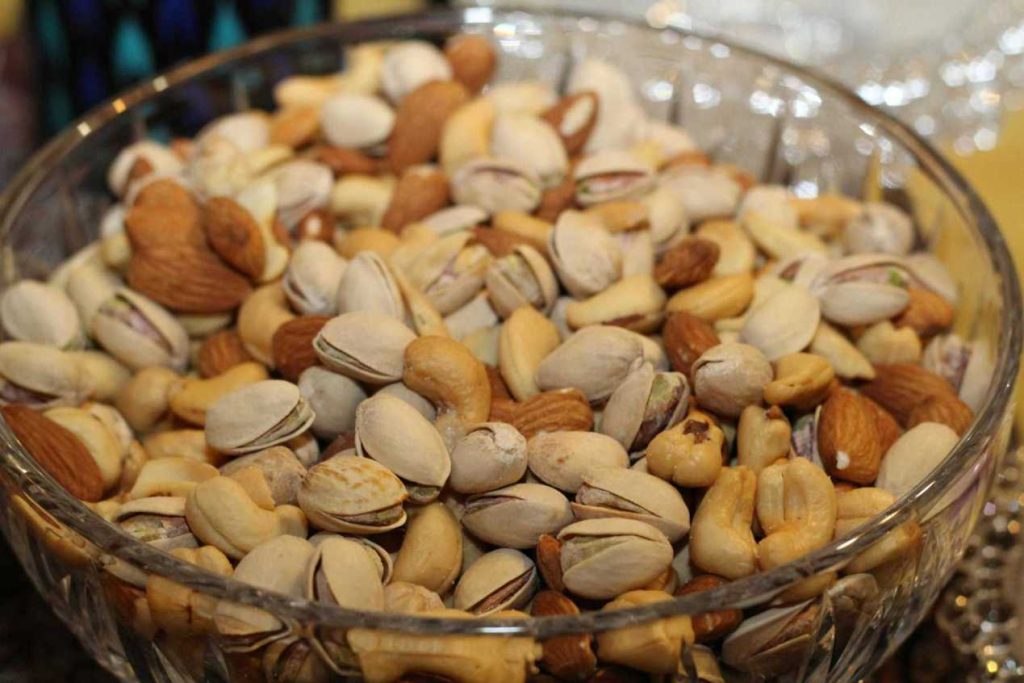
To get a balanced amount of dried fruits and nuts in your pregnancy diet, try mixing them into your morning oatmeal or yogurt for extra nutrients.
Grab a handful of mixed nuts and dried fruits for a quick energy boost when you need it.
Sprinkle chopped nuts and dried fruits over salads to add some crunch and sweetness.
Blend dried fruits and nuts into smoothies for a tasty and filling treat.
Make your own trail mix by combining your preferred dried fruits and nuts for an easy snack on the move.
Experiment with baking by adding chopped nuts and dried fruits to muffins, cookies, or bread for more flavor and nutrition.
Moderation is Key: Finding the Right Portion Sizes
The key is moderation! No matter which trimester you’re in, enjoy these nutritious snacks in reasonable amounts.
For most pregnant women, about half a cup of dried fruits and half an ounce of nuts daily is usually recommended. However, individual needs vary.
Dry Fruits for Healthy Pregnancy
Adding dry fruits to your diet in a balanced and controlled way will be beneficial for you!
Here are a few benefits of dried fruits and nuts during pregnancy:
- Fiber: Helps combat constipation, a common pregnancy woe. With the fiber boost from dried fruits (prunes, figs, apricots) and nuts (especially almonds, hazelnuts, and Brazil nuts). Fiber also helps regulate blood pressure and weight gain.
- Protein: Supports your baby’s development and tissue repair. Almonds, walnuts, pistachios, coconuts, and dates are excellent sources.
- Iron: Prevent iron deficiency anemia by incorporating iron-rich dried fruits (dates, raisins) and nuts (walnuts, almonds, cashews).
- Copper: Promotes healthy development of your baby’s heart, blood vessels, and nervous system. Copper is found in dried fruits (apricots, prunes) and nuts (almonds, cashews). Copper also aids in iron absorption.
- Minerals: Get a mix of calcium and magnesium (vital for bone and muscle development) from dried fruits (figs, apricots) and nuts (almonds, cashews). And Manganese from hazelnuts and pecans for healthy bones and cartilage formation.
- Vitamin: Support your baby’s eyesight and immune system with vitamin A from dried fruits (apricots, prunes). Promote brain and red blood cell development with vitamin E from nuts (almonds, walnuts). Get essential vitamin K for blood clotting from raisins.
Consulting Your Healthcare Provider: Individualized Advice
Your daily intake of dried fruits during pregnancy depends on your calorie intake and health. While no dry fruits are inherently bad for you, it is better to eat them in moderation Consult a nutritionist or doctor to help customize a safe diet for you.
As our brand turns 5, we are giving our valued customers a special 20% off, visit our website to know more!
Also Read:
Top Dry Fruits For Weight Gain
The Best Dry Fruits List to Enhance Your Health [Top 10]