
What Does Saffron Smell Like? Explained!
Saffron smells very distinctive and unique. Saffron smell has aromatic and olfactory properties that have attracted people from past generations to the present. Saffron due to this reason used in food, beverages, and even perfumes because it transcends cultures and cuisines.
Smell of saffron alluring aroma, both earthy and honeyed, has tantalized taste buds and ignited passions for centuries. Its warm threads find themselves woven into the rich tapestries of countless cultures, coloring not just plates but also celebrations, and rituals.
It’s a bridge between the past and the present, a reminder that the pursuit of culinary excellence and royal touch can be as timeless as the spice itself.
Shop & Save on Kashmiri Saffron
In the present times, when saffron is out of reach for many people across the world, questions like “What does saffron smell like?” or “What does saffron taste like?” are the frontrunners in Google’s top searches. That is because not many people know the fragrance, taste, and color of genuine Saffron.
Saffron is often described as having a warm floral fragrance that has a delicate sweetness and hints of spice.
In this blog, we embark on a sensory journey into a deeper understanding of the aromatic mysteries of saffron and all the underlying tones.
Etymology: The Origin Of Saffron
The word Saffron is derived from the Arabic term za’farān which was derived from the Greek word krokom.
In Hindi, saffron is referred to as kesar. However, there are many similar words among many different languages that are believed to be the possible origins of the word.
Saffron, as a word, is not unknown to the world. But as a spice, it is a niche product that has gained a well-deserved reputation of an “exotic luxurious taste” in the culinary world.
It is one of the world’s most costly spices, hence considered luxurious. But, what eludes the majority of people, is the properties of Saffron.
This informational gap about the properties of saffron is the reason why so many people often fall prey to scams when buying saffron because the identifying tests for real saffron are not well-known globally.
The Valley of Kashmir, home to our brand Kashmirica, is one of the few places in the world that produces this rare spice and is authentic.
Also Read: The State of Saffron in Kashmir
What Exactly is Saffron?
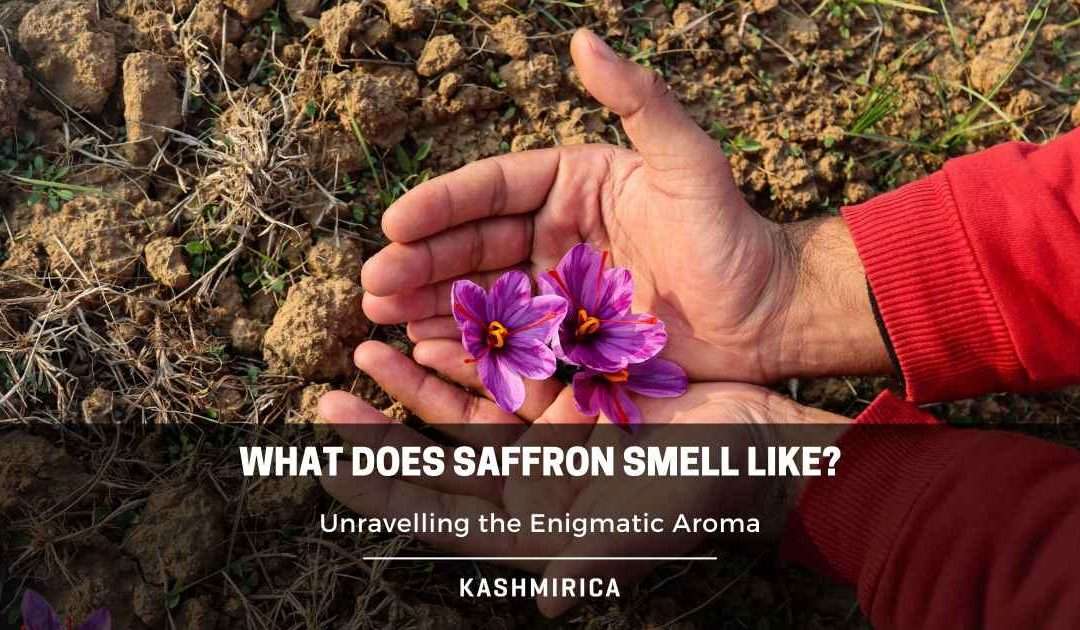
Saffron threads are strong red stigmas of the female saffron flower with lighter orange-red tips, hence the trumpet-like shape. The vibrant flower ranges from shades of pastels to deep purple. The flowers are harbingers of spring in the valley and are harvested mid-fall. The flowers themselves are known for their honey-like smell.
Every year, bulbs or corms are planted to produce these flowers as the saffron flower is sterile, meaning it cannot grow without human intermediation.
After the flowers bloom, they are hand-picked as they are very delicate and wilt and break apart easily. Each flower has three stigmata, which are separated from the flower one by one and are preserved by sun-drying them for 3-10 days until the water content is below 10%.
The bulbs are then excavated and new tubers are planted again next season. This is the reason it is one of the most expensive spices in the world.
On average, around 150 flowers will produce only 1 gram of saffron, meaning it takes roughly 60,000 flowers for the production of 1kg of Saffron.
The global production of Saffron is dependent on Iran, India, Greece, Afghanistan, Morocco and Spain. The painstaking process of limited production in the face of unimaginable high demand is the reason that Saffron is also one of the most adulterated spices. Organic and Authentic Saffron is the most sought-after spice in the world and for a variety of purposes.
The residents of Pampore, an area of Kashmir, cultivate Crocus sativus in their fields, which you can visit to experience the hard work involved in bringing this spice to your kitchen pantry. Be ready to experience the tedious and strenuous harvesting process and the efforts of the locals who work hard to bring this spice from the fields to your home.
The Smell of Saffron: An Aromatic Magic

Historians around the world believed that even with its multiple medicinal properties and uses, what drew old civilizations towards the cultivation of Saffron was the smell and taste of the spice.
It is used not only in the food and culinary industry, but the saffron smell in perfume is used around the world.
The perfume connoisseurs date back the use of saffron as a scent, to ancient Greek and Roman civilizations and even Egyptians. It is believed that the Greeks used to carry saffron pouches to mask their body odor with its fragrance.
The essence of Saffron has a floral bouquet that is reminiscent of jasmine and rose petals with a hint of honey. Beyond that, notes of warm, earthy spice mingle with hints of bitterness creating a depth in the profile.
Kesar or saffron is said to contain over 150 aromatic chemicals and proves to be a multi-faceted perfume material. The filaments of Kesar do not have any fragrance when fresh, but once they are dried in the sun, the heat brings a chemical change which results in the production of Safranal.
Safranal is the main component that constitutes the essential oil of saffron, about 30-70%. It is the chemical that provides that specific smell of saffron.
What does Saffron taste like in Food

The natural fragrance of saffron is described to have earthy tones, which are accented by floral or hay and husk-like tones.
Saffron smell is like an elusive scent both earthy and spicy. In simple terms, the smell of saffron is like that of dried flowers and earth, which is not far from what saffron really is.
Kesar not only enhances the taste of dishes it is used in, but it also adds a touch of exquisite floral aroma to the dishes. In merely a dash of saffron threads, even three to five, the subtle taste and aroma come through which pairs well with savory foods.
The use of Saffron is prominent in Mediterranean and South Asian cuisines. Essential oils made out of saffron are used in the food industry due to their flavor in Indian, Arab, Persian, Turkish, and European foods, beverages, and drinks.
Indian dishes like “Biryani” and “Kashmiri Pulao” get their signature deep and rich fragrance from saffron and other aromatic spices like cardamom and cloves. Italians use Saffron in “Risotto” and in Spain, it is used in “Paella”.
Morocco specializes in aromatic tea by steeping the tea with saffron threads.
Kashmiri Kehva or Kahwa is another aromatic beverage that borrows the spice’s olfactory properties to enhance the drink’s flavor and, smells heavenly.
Threads of the spice or powdered form are used to color milk Kesar Doodh and dye food products. Some desserts around the world also use saffron to add a depth and richness to the flavor profile.
Saffron in Perfumery: What Does Saffron Smell Like?
Saffron smell due to its fragrant properties is used in perfumes and scents for people and homes alike.
Perfumers and savants around the world use different tones to explain the scent of saffron.
Scent of kesar is either described as a “remnant of warm honey and grass” others use the smell of saffron to compliment and undercut the smell of leather chords in their perfumes. The smell of saffron is used in perfumes for men and women alike.
Naturally, saffron contains a chemical called “safrol” which is a known allergen, so natural saffron is not used in perfumes. Only extracted components like “Saffranal and Lanierone” are allowed to be used in perfumes.
Many developed compounds are extracted from saffron and are used as perfume base notes that provide a camphoraceous herbal note. Apart from that these compounds have a blend of faintly earthy and tobacco-leaf top-notes.
The depth and character of saffron are most loved with a combination of vanilla and amber woody scents, musky rose, and spicy cinnamon.
Shop Online for Pure Kashmir-made Musk
Apart from perfumes, Saffron Oil, which provides a concentrated and long-lasting fragrance is also used in the beauty and skincare industry.
The sensual and bewitching composition of the essential oil often mixed with rose and vanilla combines the spicy base notes with floral top notes and creates an iconic combination that is proven beneficial in skincare.
Kesar also has an anti-sun effect, so it is preventative of skin diseases. Saffron-scented candles are also available in the market these days.
Shop and Save on Essential Oils
Does Packaging Affect The Aroma Of Your Saffron?
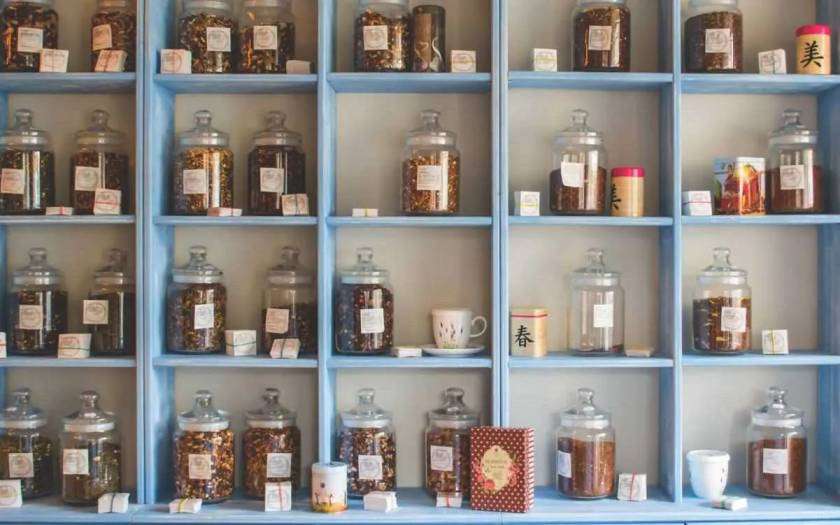
Saffron(Kesar) is expensive and delicate and the fragrance is volatile, so the consumers and customers should get their money’s worth in every way possible whether it’s Kesar filaments, Saffron Perfume oil, or Saffron Essential Oil vacuum sealed packaging is the way to go.
Buying saffron from online stores, always check the packaging description and storage instructions of the product you are buying.
Vacuum-sealed containers not only keep the strands safe during transit but also preserve the freshness, aroma, and vibrant color of the threads. And if the package is resealable that adds an added benefit in the storage process for you as the consumer.
Resealable air-tight jars prevent the aroma and scent from escaping and protect the saffron from moisture, oxidation, and other particles. These packets keep the freshness of the product intact for a longer duration, which is desirable. This will also increase the shelf life of your kesar. For more details read our article on How To Store Saffron Like a Pro?
Here at Kashmirica, we pride ourselves in providing you with one of the most authentic saffron from the valley itself. Our long-red Mongra saffron is super aromatic, ethically sourced, and handpicked by local farmers. Our team processes and packs your order on placement to prevent adulteration.
So, we invite you to infuse your next dish, sweet or savory, with the magical aroma of our organic saffron, and remember, that when you savor it, you’ll not just experience a flavor; you’ll embark on a journey through history, culture and the captivating allure of Kashmiri Kesar that will make you want to keep coming back.
Also Read:
Kannauj: The Perfume City of India
Top 16 Perfumes for Girls {All Natural}
Buy Premium Natural Attar Perfumes Online