

Dry Fruits
Showing all 15 resultsSorted by popularity
-
-
-
-
-
-
-
-
-
-
-
-
-
-
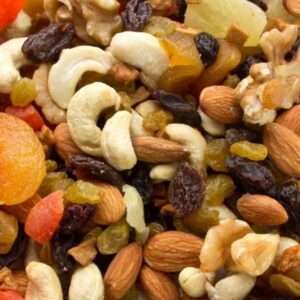 Original price was: ₹3,200.00.₹2,990.00Current price is: ₹2,990.00.
 -





Kashmiri Dry Fruits, Pure Badam, Akhrot & Valley Dry Fruits Online
Kashmiri dry fruits are among the most prized natural foods in India, grown in the high-altitude orchards and mountain valleys of Kashmir, where cool Himalayan air, mineral-rich glacial soil, and extreme seasonal variation produce almonds, walnuts, apricots, figs, and raisins of extraordinary flavour, nutritional density, and natural quality. Kashmirica’s Kashmiri dry fruits collection brings you the Valley’s finest directly: Kashmiri Mamra badam with its distinctive oil richness, paper-shell Kagzi akhrot with its deep walnut sweetness, sun-dried Kashmir apricots, aromatic anjeer, and more, all sourced from Valley farms with no middlemen, no adulteration, and no compromise. Buy Kashmiri dry fruits online from Kashmirica and taste the difference that origin, altitude, and direct sourcing make.
What Makes Kashmiri Dry Fruits Special?
Kashmir’s geography creates growing conditions for dry fruit crops that are unique in India and rare globally. The Valley sits at 1,500–2,500 metres above sea level, high enough to produce crops with concentrated natural sugars, oils, and nutrients, but sheltered enough by the surrounding Himalayan ranges to avoid the harsh extremes of full-altitude growing. The soil is deep, alluvial, and enriched by centuries of Himalayan snowmelt, laden with minerals that transfer directly into the nutritional profile of what grows in it.
The Kashmir Valley has been one of India’s primary dry fruit-producing regions for centuries. Its almonds, walnuts, and apricots appear in Mughal court records, were traded along the Silk Route, and are documented as prized exports from the subcontinent for over 500 years. Kashmir is currently one of the largest producers of walnuts in India, a significant producer of almonds, and the only Indian region producing certain specific varieties, the Mamra almond, the Kagzi walnut, and the dried Kashmiri apricot, that have no genuine equivalent grown elsewhere in the country.
When Kashmirica says ‘Kashmiri dry fruits’, we mean dry fruits actually grown in the Kashmir Valley, not dry fruits shipped from Rajasthan, Afghanistan, or other regions and repackaged with a Kashmiri label. Our sourcing is direct, traceable, and backed by the same authenticity guarantee that defines everything we sell.
Famous Kashmiri Dry Fruits, What Kashmir Grows Best
Kashmir is famous for a specific range of dry fruits that either originate in the Valley or reach their finest form when grown there. Here is the complete list of famous dry fruits in Kashmir:
Kashmiri Badam, Mamra Almond (The King of Kashmiri Almonds)
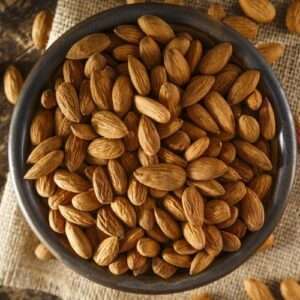
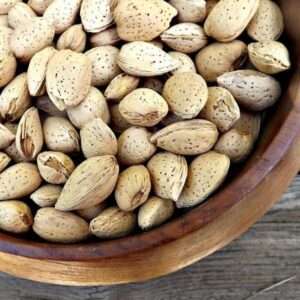
Kashmiri Mamra badam is the most prized almond variety grown in the Valley, and arguably the finest almond grown anywhere in India. Smaller and more wrinkled than commercially farmed California almonds, Mamra almonds are extraordinarily high in natural oils, giving them an intensity of flavour, richness, and nutritional density that no other almond variety matches. ‘Mamra’ refers to the characteristic crinkled appearance caused by the nut’s high fat content rather than water content, the same quality that makes it so nutritionally valuable.
Kashmiri Mamra badam is the specific almond variety referenced in Ayurvedic texts as medhya (brain-nourishing). The combination of Vitamin E, riboflavin, L-carnitine, and natural omega fatty acids in Mamra badam makes it particularly effective for brain health, memory, and sustained energy.
Also available: Kashmiri Kagzi badam, the paper-shell almond, named for its exceptionally thin shell that can be cracked by hand pressure alone. Slightly larger than Mamra with a creamier, milder flavour.
Kashmiri Akhrot, Kagzi Walnut (Paper-Shell Walnut)
Kashmiri akhrot is one of India’s finest walnuts, grown in the terraced orchards and forested slopes of the Valley, where Juglans regia trees have thrived for centuries. Kashmir is one of India’s largest walnut producers, and the Kashmiri Kagzi akhrot (paper-shell walnut) is the most celebrated variety: thin-shelled enough to crack by hand, with light amber kernels that are naturally sweet, oil-rich, and markedly less bitter than commercially farmed walnuts.
Kashmiri walnuts are significantly higher in natural Omega-3 fatty acids, antioxidants (ellagic acid, polyphenols), and Vitamin E than plains-grown equivalents, making them one of the most nutritionally dense foods available in the Indian dry fruit market. Available in both Kagzi akhrot with shell and shelled giri (kernel halves) forms.
Kashmir Anjeer, Dried Figs from the Valley
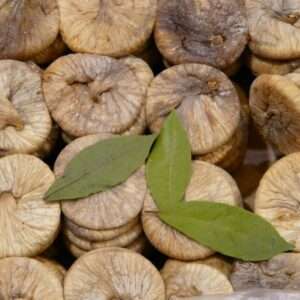
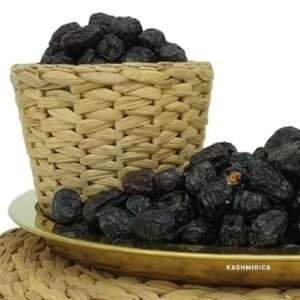
Kashmir anjeer (dried figs) is one of the Valley’s most distinctive dry fruits, sun-dried Ficus carica figs with a natural sweetness, chewy texture, and characteristic dried-fig aroma that is noticeably richer than commercially dried figs imported from Turkey or Iran. Kashmir’s climate produces figs with a higher natural sugar concentration and a more intense flavour, and the traditional sun-drying method used in the Valley preserves the fruit’s natural colour and nutritional integrity.
Kashmiri dried figs are among the richest plant sources of calcium, iron, potassium, and soluble fibre available in the dry fruit category. They are particularly valued for digestive health, bone density, and as a natural energy food.
Kashmir Apricot, Dried Apricots from the Valley
Kashmir apricot (khurmani), dried apricots from the Himalayan orchards of the Kashmir Valley, are a world apart from the orange, sulphured dried apricots found in most supermarkets. Kashmiri dried apricots are naturally dried without sulphur dioxide treatment, giving them a darker, amber-brown colour and a more complex, honeyed flavour than artificially preserved equivalents. The apricots grown in the mountain villages of Kashmir and Ladakh are smaller, more aromatic, and higher in beta-carotene than commercially cultivated varieties.
Kashmir dried apricots are exceptional sources of non-heme iron (making them particularly valuable for anaemia), beta-carotene (Vitamin A precursor), and soluble dietary fibre. They are one of the most nutritionally complete dried fruits available.
Kashmiri Kismis, Kashmiri Raisins
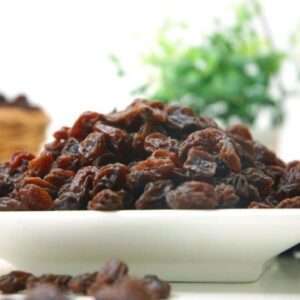
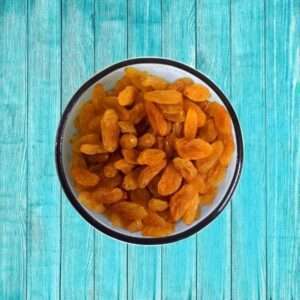
Kashmiri kismis (raisins) are sun-dried grapes from Kashmir’s own vineyard heritage, the Valley has been producing grapes and raisins since the Mughal era, when Kashmiri grapes were a prized delicacy at the court. Kashmiri raisins are darker, plumper, and more intensely flavoured than commercially produced raisins, with a natural sweetness and a slight tartness that sets them apart. Rich in iron, potassium, and natural antioxidants.
Kashmiri Anjeer (Dried Figs), White Variety
Kashmir also produces a distinctive white or pale yellow variety of dried fig, sun-dried from green fig varieties grown in the Valley’s orchards. Lighter in colour and slightly milder in flavour than the dark variety, white Kashmiri figs are particularly prized for their delicate sweetness and high fibre content.
Kashmiri Chilgoza, Pine Nuts from the Himalayas
Chilgoza (Pinus gerardiana) pine nuts are one of Kashmir’s most unique and expensive dry fruits, harvested from the chilgoza pine trees that grow wild in the Himalayan forests of Kashmir and Himachal Pradesh. These elongated, ivory-coloured pine nuts have a rich, buttery flavour with a distinctive resinous quality that sets them apart from the smaller Chinese pine nuts found in most markets. High in protein, healthy fats, and Vitamin E, Kashmiri chilgoza pine nuts are among the rarest and most nutritionally valuable dry fruits in the world.
Nutritional Benefits of Kashmiri Dry Fruits
Kashmiri dry fruits are nutritionally superior to plains-grown equivalents for reasons directly tied to their growing conditions, altitude, soil mineralogy, traditional farming practices, and natural drying methods. Here is a summary of the key benefits:
Kashmiri Mamra Badam, Brain, Heart, and Energy
- Brain health: Vitamin E, riboflavin (B2), L-carnitine, and Omega-3 fatty acids support cognitive function, memory, and neural health, Mamra is the almond most closely associated with brain nourishment in Ayurvedic tradition
- Heart health: monounsaturated and polyunsaturated fats help maintain healthy LDL cholesterol and support cardiovascular function
- Energy: slow-release complex carbohydrates, protein, and healthy fats provide sustained energy without blood sugar spikes
- Skin and hair: Vitamin E and natural oils nourish skin from within and support hair health
Kashmiri Akhrot (Walnut), Omega-3 and Antioxidant Powerhouse
- Omega-3 fatty acids (ALA): the highest plant-based Omega-3 content of any nut, essential for brain, heart, and inflammatory regulation
- Antioxidants: ellagic acid, ellagitannins, melatonin, and polyphenols in walnut skins are among the most potent natural antioxidants in any dry fruit
- Heart protection: Omega-3s, L-arginine, and polyphenols collectively reduce LDL cholesterol, improve arterial function, and lower blood pressure
- Gut health: prebiotic fibre and polyphenols support beneficial gut bacteria populations
Kashmir Anjeer (Dried Figs), Fibre and Mineral Density
- Calcium: one of the highest plant-based calcium sources in the dry fruit category, comparable to dairy per 100g serving
- Iron: significant non-heme iron content, particularly relevant for vegetarians and those managing anaemia
- Soluble fibre: prebiotic fibre supports digestive health, feeds beneficial gut bacteria, and helps regulate blood sugar
- Potassium: supports heart health and blood pressure regulation
Kashmir Apricot, Iron, Beta-Carotene, and Bone Health
- Non-heme iron: among the highest iron content of any dried fruit, essential for those managing iron-deficiency anaemia
- Beta-carotene (Vitamin A): the deep colour of Kashmir apricots reflects high beta-carotene, essential for eye health, skin, and immune function
- Calcium and phosphorus: supports bone density and strength
- Potassium: cardiovascular and blood pressure support
How to Use Kashmiri Dry Fruits
The most effective and traditional way to enjoy Kashmiri dry fruits:
- Soaked overnight: soak Kashmiri Mamra badam or Kagzi akhrot in water overnight, peel or use as-is in the morning, eat on an empty stomach, this is the Ayurvedic method for maximum nutritional bioavailability. Soaking reduces tannins and phytates that can inhibit mineral absorption
- Morning wellness handful: 8–10 almonds + 5–7 walnut halves + 2–3 dried apricots + 2 figs = a nutritionally complete morning supplement that requires no preparation and delivers vitamins, minerals, Omega-3s, fibre, and antioxidants simultaneously
- In Kashmiri Kahwa: a traditional Kashmiri green tea with saffron, cardamom, and a few slivered Kashmiri almonds, the classic morning beverage of the Valley
- Cooking: ground Kashmiri almonds are essential in Wazwan gravies, Kashmiri Sheer Chai, and slow-cooked meat preparations, walnut chutney (akhrot ki chutney) is a Kashmiri kitchen staple
- Baking and desserts: Kashmiri walnuts and almonds elevate kheer, halwa, barfi, and any milk-based dessert
- Trail mix: Kashmiri Mamra badam + Kagzi akhrot + kismis + dried apricot = the most nutritious trail mix available from a single regional source
- Gifting: a curated Kashmiri dry fruit box, Mamra badam, Kagzi akhrot, anjeer, apricot, kismis, is a premium, health-conscious gift for any occasion
Kashmiri Dry Fruit Box, The Perfect Gift
A Kashmiri dry fruit box is one of the most universally appreciated gifts in Indian culture, nutritious, premium, and carrying the natural prestige of Kashmir’s agricultural heritage. Kashmirica’s dry fruit collection allows you to curate your own combination of Mamra badam, Kagzi akhrot, dried apricots, anjeer, and kismis for a gift box that stands apart from the generic mixed dry fruit assortments available in supermarkets.
Our Kashmiri dry fruits are popular as gifts for: Eid, Diwali, weddings, corporate hampers, new home gifts, health-conscious gifting, and as meaningful presents for the Kashmiri diaspora who may not have had access to genuine Valley dry fruits for years. Contact Kashmirica for custom gifting and bulk order pricing.
Kashmiri Dry Fruits Price, What to Expect
Kashmiri dry fruits price is higher than generic supermarket dry fruits, and the difference is entirely justified by origin quality, nutritional density, and direct sourcing. Here is what to expect:
- Kashmiri Mamra badam price per kg: the most premium Kashmiri almond variety, Mamra commands a higher price than California or standard Indian almonds due to scarcity, hand-harvesting, and its superior oil-to-water ratio
- Kashmiri badam price 1kg (Kagzi): slightly more accessible than Mamra, available in both with-shell and shelled forms with pricing reflecting the manual shelling labour
- Kashmiri akhrot price 1kg: Kagzi akhrot with shell and shelled giri kernels available at different price points, shelled giri commands a premium for the manual extraction work
- Kagzi akhrot price 1 kg: shell weight accounts for approximately 40–50% of total walnut weight, factor this in when comparing with-shell vs shelled pricing
- Kashmir anjeer, apricot, kismis: priced to reflect natural sun-drying (vs industrial drying), sulphur-free processing (for apricots), and direct Valley sourcing
Visit individual product pages for current 250g, 500g, and 1kg pricing on all Kashmiri dry fruits. Bulk and gifting order pricing available on request, contact Kashmirica directly.
Why Buy Kashmiri Dry Fruits Online from Kashmirica?
- Direct from Kashmir Valley farms: not repackaged dry fruits from other regions sold under a Kashmiri label
- Full range of famous Kashmir dry fruits: Mamra badam, Kagzi badam, Kagzi akhrot, apricots, anjeer, kismis, chilgoza, all authentic Valley produce
- No adulteration, no artificial treatment: apricots are sulphur-free, walnuts are unfumigated, almonds are unbleached
- Vacuum-packed for freshness: natural oils and flavour locked in from Valley to delivery
- Transparent pricing: Kashmiri badam price and akhrot price reflect true direct-source cost, not inflated retail margins
- 1,000+ five-star reviews from customers across India and 50+ countries
- Kashmir-based brand founded in 2019: authenticity is structural, not a marketing claim
- Ships across India and internationally to 50+ countries with tamper-proof packaging
- 2.5% of every purchase supports underprivileged communities in Kashmir